
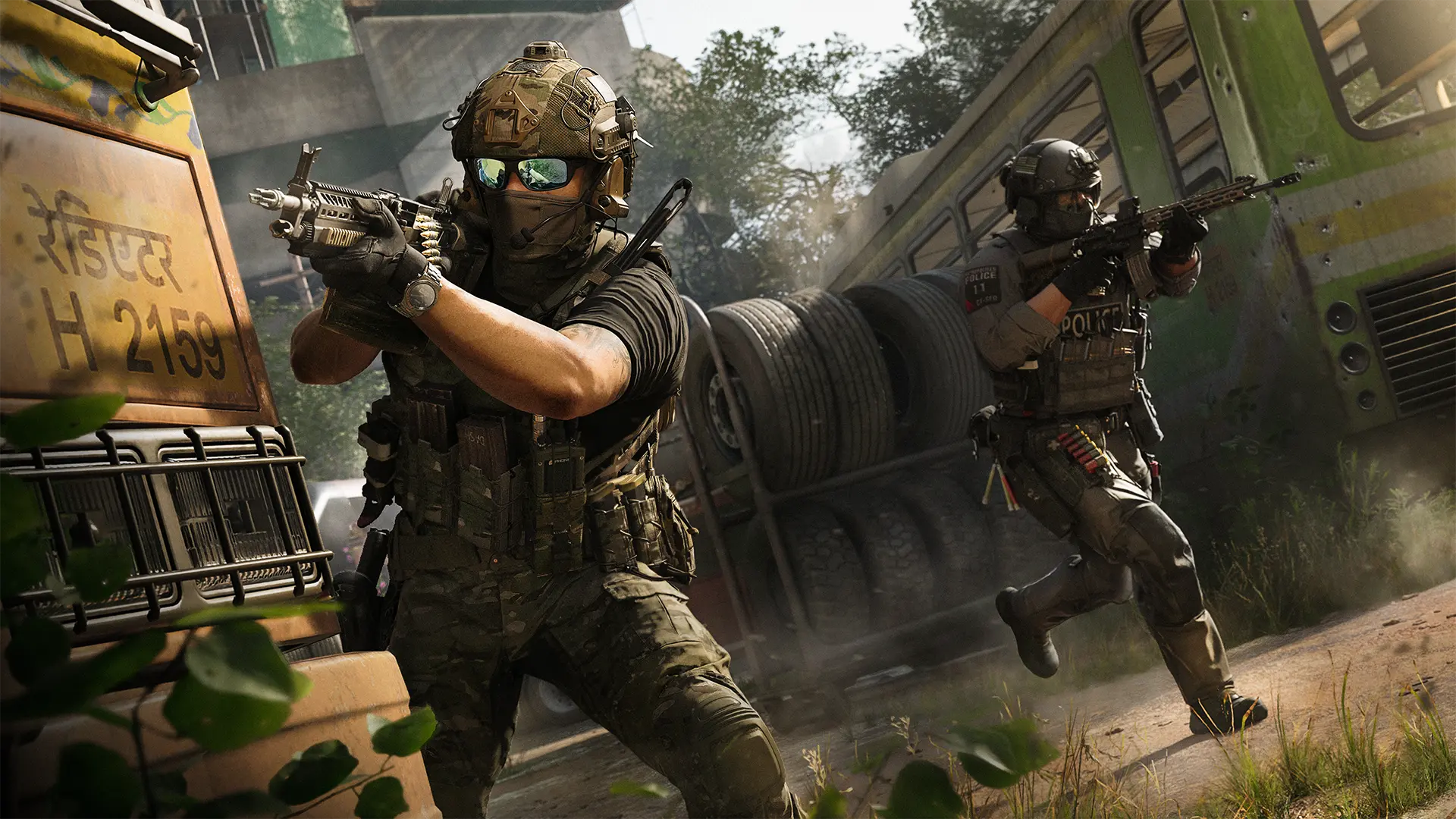
October 23 is the release date listed by Activision for Modern Warfare 4. This editorial revision updates our October 18 preparation guide with the developer interview published on October 22. We have not tested the final game, measured its performance or checked every regional storefront; the analysis below explains what to look for rather than assigning a review score.
First, separate the calendar from your access
Activision’s October 15 notice says the launch requires a separate purchase, with Game Pass inclusion planned for Holiday 2027. Campaign and DMZ early access were scheduled for October 16 and October 20 respectively. A launch date does not establish the exact unlock hour on every platform, and the publisher flags possible differences and outages.
For a group of friends, the practical starting point is therefore the store page each person actually uses. Check the edition, installed components, account and mode before arranging a session. A friend already playing an early-access mode is not evidence that your own purchase grants identical access. Avoid buying an upgrade while assuming it is the base game.
Gunny: a starting point for experimentation
In the October 22 Xbox interview, Infinity Ward describes Gunny as a way to produce weapon builds without spending a long time in Gunsmith. The same interview explains Kill Block as a modular battlefield whose layout can change between rounds.
Our reading is that Gunny’s value should be judged by the decisions it helps a player make, not by whether it produces a mythical universal best weapon. Try a proposed setup, decide which characteristic feels uncomfortable, then change one component.
Keeping the rest stable makes it easier to understand why the result feels different. Changing everything after each defeat teaches much less.
This is an editorial approach to learning, not a tested build recommendation. Matchmaking, balance changes and individual preferences can all affect impressions. We would avoid describing any opening-week configuration as compulsory until there is reproducible evidence behind that claim.
Changing maps shift the learning task
A modular battlefield raises an interesting design question: how much should a player memorize, and how much should they reassess? Our expectation, rather than a measured finding, is that familiar local features could remain useful while the route connecting them requires another look. The useful habit is to check the present sightline instead of running yesterday’s route automatically.
Variation alone does not prove good competitive design. A later review should examine readable spawn positions, the clarity of cover and whether losses feel understandable. A large number of combinations is a production statistic, not a substitute for those observations. We will need actual matches to judge whether the system produces meaningful choices rather than noise.
Plan an extraction you can afford to lose
The official Forward Operating Base guide describes DMZ’s between-deployment base for storing equipment, preparing Operators and receiving orders. Its progression separates DMZ Player Level from individual Operator development. This gives the mode a preparation layer as well as the encounter itself.
For a first shared session, our suggestion is to agree on one modest goal and a condition for leaving. Learning an interface or understanding a route can be a useful outcome even without an impressive haul. Discuss how much equipment you are comfortable risking before the group is under pressure; otherwise teammates may be pursuing different definitions of success.
After returning, identify one decision worth repeating and one worth changing. That discussion is more actionable than blaming the least experienced player. Save ambitious routes and elaborate loadouts for a point when everybody understands why they are being chosen. These are general learning suggestions, not claims of an optimal strategy.
What the launch guide cannot settle yet
Server stability, input responsiveness, long-term progression and the quality of matchmaking require separate testing. Official explanations establish the intended mechanics, not how consistently the live game delivers them.
Before paying for an edition or changing a device setting, consult the current official instructions for your platform. This revision adds context to the existing guide; it does not turn advance information into a hands-on verdict.

Comments