
What actually arrived
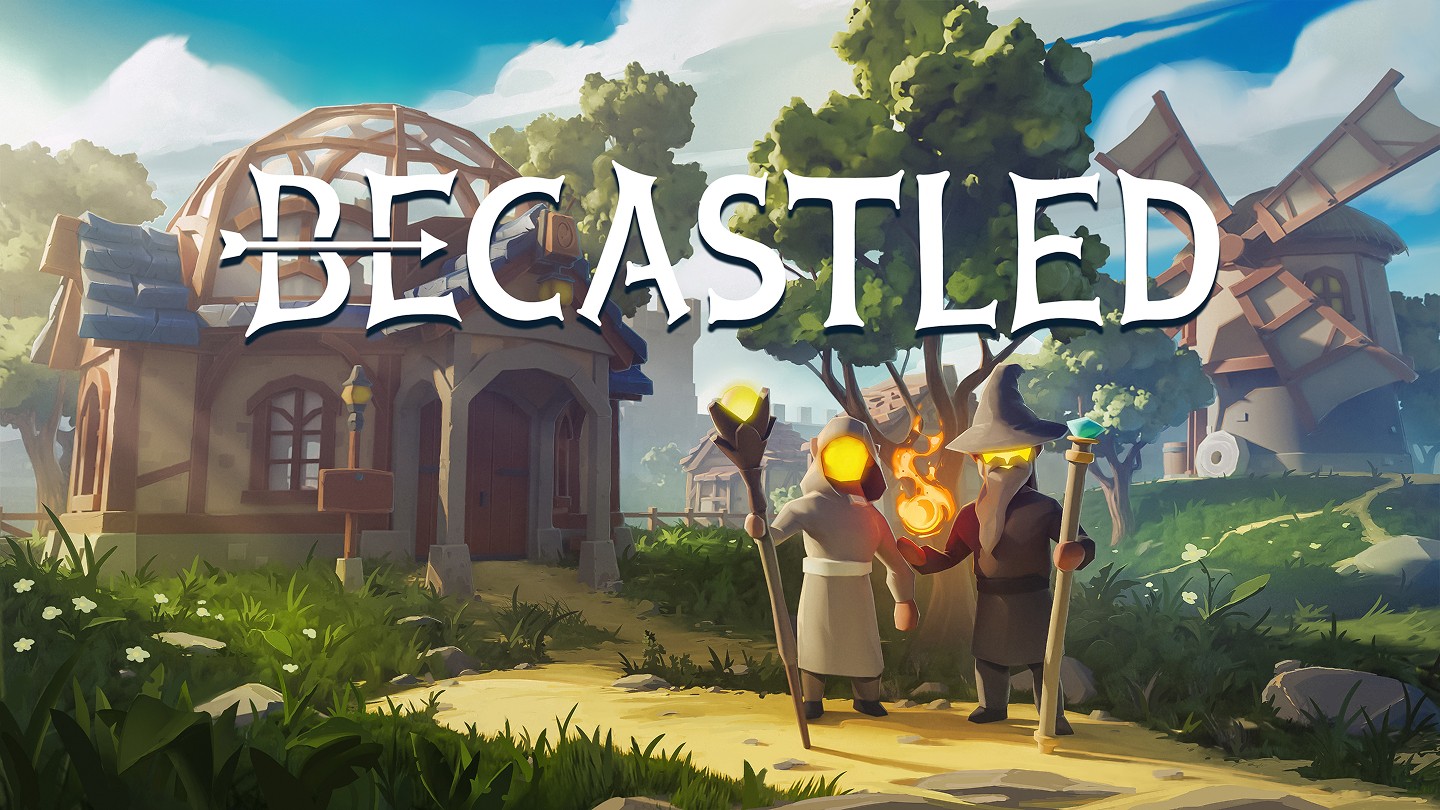
Nintendo dates Traits and Some Magic to 22 October 2026 and describes it as free downloadable content requiring Becastled. Its listing identifies Nintendo Switch, not a standalone native Switch 2 edition. It adds Mages, Clerics and a Mage School: area damage and healing join the available tools.
A compact rule change
In his Xbox Wire developer article, Bogdan Pavlenko describes choosing one of three traits periodically and after a Blood Moon. More than 40 traits are offered; Master of the Bow trades an archer-only army for greater damage. Glass Cannon exchanges health for damage. The unfinished pre-game modifier experiment is explicitly outside this DLC.
Keep the game and the expansion separate
Steam records the base game’s full release as 22 October 2025, with earlier access beginning in 2021. It identifies Mana Potion Studios as developer and Pingle among the publishers. The core is daytime settlement building followed by nighttime defence. Steam lists Ukrainian interface support; this is not proof of identical language options on consoles.
The interesting number is not forty
This is an editorial analysis of the announced design, not a hands-on verdict. A content count says little about how often a player faces a difficult decision. Forty options can still produce one routine answer; a much smaller set can be compelling if circumstances genuinely change which answer is useful.
The test is what happens after the novelty of reading the descriptions wears off.
A useful question for a returning player is whether the next attempt calls for a different plan before the first serious mistake. If the plan changes only after defeat, the system may be teaching through failure.
If a player can identify the risk in advance, it offers room for deliberate experimentation. Both approaches can be enjoyable, but they appeal to different expectations.
Evaluate a decision at three moments
Before selecting an option, ask what problem the current settlement actually has. During the next encounter, watch whether that problem becomes less important or merely moves elsewhere.
Afterwards, consider what it would cost to return to the previous approach. This three-step check is our suggested way to evaluate strategic choices, not a claim about hidden formulas in Becastled.
It also avoids a common comparison error: measuring a choice only against doing nothing. The relevant alternative is the other decision available at that moment. An impressive result can still come at a high opportunity cost. Conversely, a modest result may be valuable because it leaves more room to recover from the next surprise.
Repeatability matters more than a spectacular run
One unusually successful attempt is a reason to investigate, not enough evidence for a universal build guide. A fair comparison would hold difficulty and other starting conditions as steady as possible, change one major decision, and record both success and failure. Without that discipline, better results may simply reflect practice rather than the feature being tested.
There is a second measure worth keeping separate from winning: how much attention the game asks for. Some players enjoy carefully reconsidering every decision; others value a familiar rhythm after work. A design can succeed at offering variety while becoming less comfortable for the latter group. That is a preference question, not automatically a balance fault.
What to check before starting
First confirm the installed game and the add-on belong to the same platform and account region. A store entry for downloadable content should not be read as a purchase of the underlying game. The Nintendo listing supports a clear statement about that version; it does not settle how every other storefront packages the content.
Next, read the current in-game explanation rather than assuming that an old community build guide describes the new rules. If keeping a previous playthrough matters, check the game’s own save and update guidance before experimenting. We have not tested save migration and do not promise that a particular old save behaves in a particular way.
Finally, decide what you want from the session: a familiar city to maintain, a different tactical problem, or a careful comparison of choices. That makes the eventual verdict more useful than asking whether an expansion simply adds enough things.
A reason to revisit, not a score
The confirmed release gives existing players something concrete to inspect. A recommendation on stability, console performance or long-term balance would require testing beyond the source material used here. Those questions remain open in this article.
The most useful takeaway is a method: identify the problem, compare alternatives, and judge the result over more than one attempt. If the update helps players explain why they made a choice, it can offer value beyond the length of its feature list. Whether it consistently achieves that is the question to take into the game.

Comments