
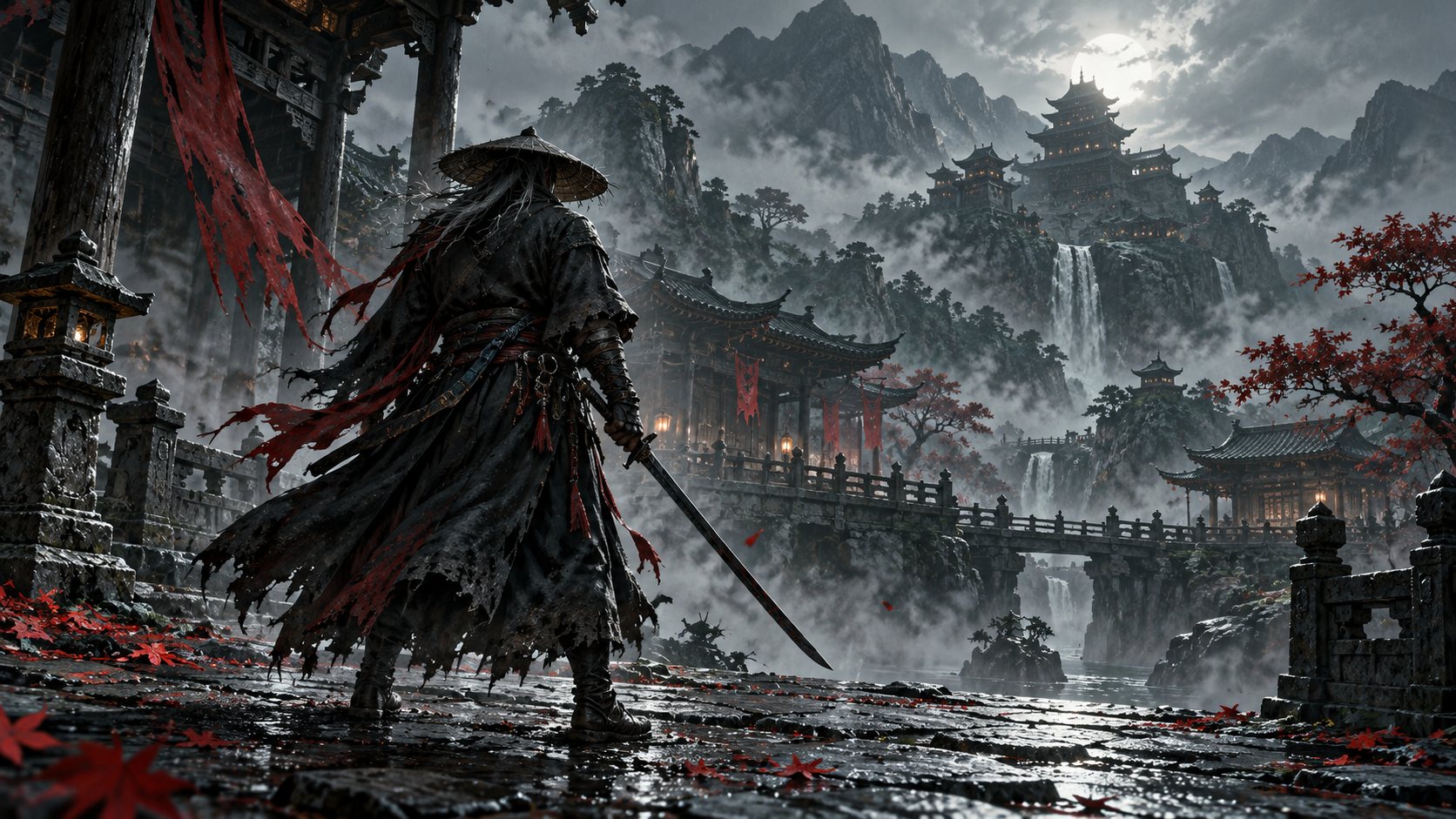
Phantom Blade Zero is worth discussing as more than a spectacular action game. A new blade need not matter simply because its damage number is higher. The more interesting question is whether it changes how players read a fight—or how they look at a route they have already visited. That connection between victory, equipment and exploration is the focus here.
This is an analysis of official material, not a review based on our own playthrough. Confirmed source statements and our interpretation of their design implications are kept separate.
Release context: this is no longer a preview
As of October 31, 2026, S-GAME’s official website marks the game as available and lists October 29, 2026 as its release date. PlayStation Support identifies PS5 and PC. Calling this a pre-release preview would therefore be misleading. Official website; PlayStation Support.
The confirmed connection between rewards and routes
PlayStation Blog’s October 28 article says most weapons come from defeated bosses. Hua’s Scarlet Wraithblade produces flowers that slow enemies; certain Phantom Edges open blocked routes. These are the platform blog’s descriptions, not findings from our own testing. Source.
The appeal of that structure lies in a reversal of roles. A player first has to survive an enemy’s tool, then gets to make decisions with it. In a successful implementation, recognition becomes part of the reward: something previously understood as a threat becomes an option.
Receiving a trophy does not, by itself, establish mechanical depth. The tool needs a purpose beyond the arena where it was earned. A brief showcase effect can wear thin quickly; a meaningful change to spacing, tempo or target priority could influence many later encounters. That distinction is a useful evaluation criterion, not a conclusion we can claim to have verified here.
Arsenal size is not the same as freedom
In an August post, S-GAME’s founder described more than 30 main weapons and 25 Phantom Edges. He also outlined reforging that returns materials for investment in another weapon. These are developer-provided figures and system details. S-GAME’s explanation.
The cost of experimenting can matter more than the number of available items. An upgrade system may discourage players from changing equipment once they have committed resources to a familiar choice. Reducing that penalty makes alternatives easier to investigate rather than merely collect.
Three questions help separate a large inventory from a genuinely varied arsenal. Are differences noticeable before a weapon is fully upgraded? Is its intended purpose understandable?
Does an older tool retain a reason to be used? None requires every item to be equally effective in every situation. They ask whether the choices produce useful trade-offs instead of a simple ladder of replacements.
Revisiting a place should change its meaning
An ability-gated route can make an existing location feel different without requiring a completely new environment. The player sees a familiar obstacle with a new possibility in mind. In principle, that is an efficient way to connect progression with spatial memory.
The return journey still needs to justify itself. A memorable landmark encourages anticipation; an indistinct barrier invites tedious searching. A substantial discovery makes the detour feel intentional; a token reward can make it resemble clearing an administrative checklist. Without a playthrough, we cannot say which experience dominates Phantom Blade Zero.
There is also a difference between learning an action and acquiring a key. A tool used across several situations invites players to understand a rule. One assigned to a single prescribed doorway instead asks them to remember a match.
Both can serve a game, but they offer different kinds of agency. Promotional descriptions alone cannot establish how consistently a finished game bridges that gap.
What to watch for when trying new equipment
Damage is only one useful comparison. Comfortable range, recovery after an attack and the ease of returning to a defensive response may reveal more about how a tool fits a particular player. This is a general framework for understanding combat, not a tested strongest-build recommendation.
For exploration, remembering the kind of obstacle is often more useful than remembering only that a path was closed. A new ability can then suggest a specific destination rather than a tour of every previously visited corner. We are not supplying unverified locations, secret reward conditions or a supposed optimal boss order.
The question that matters
The most interesting measure of Phantom Blade Zero’s arsenal is not how many blades can be collected, but how many different decisions they support. Official information establishes a reason to examine the relationship between fighting and exploration.
Judging its execution requires separate hands-on work: observations about balance, return journeys and the practical value of rewards. A platform-holder’s editorial coverage is not a substitute for that assessment.

Comments